
Wearable robots
What is a wearable robot?
From machine to gear to clothing
A wearable robot is a robot worn on the body that assists human strength and movement. As it spreads from repetitive industrial work to caregiving, rehabilitation and defense, its form has changed considerably. This article covers what a wearable robot is, how it works, and the order in which its form factor has shifted.
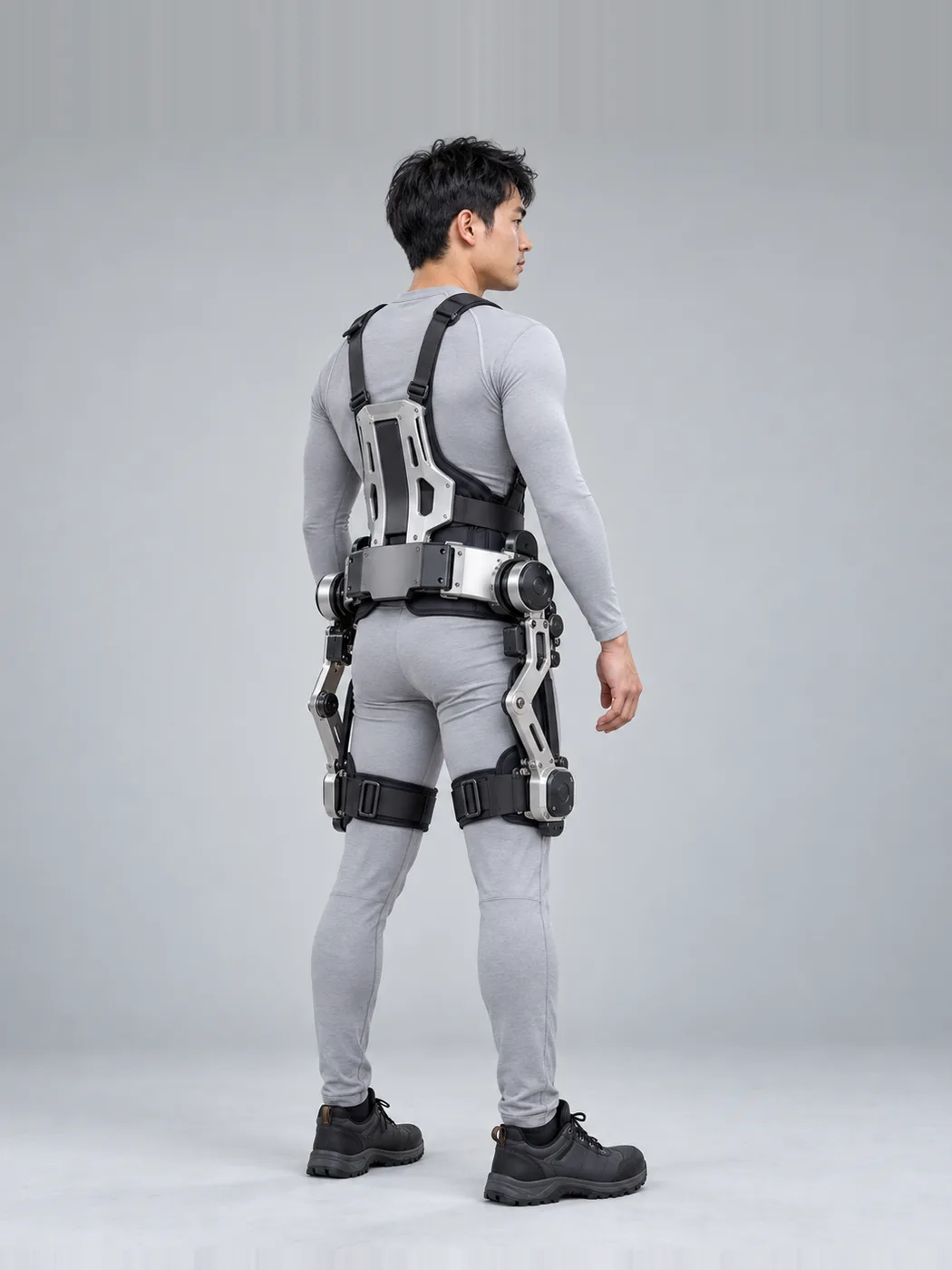 Concept image
1st — Machine
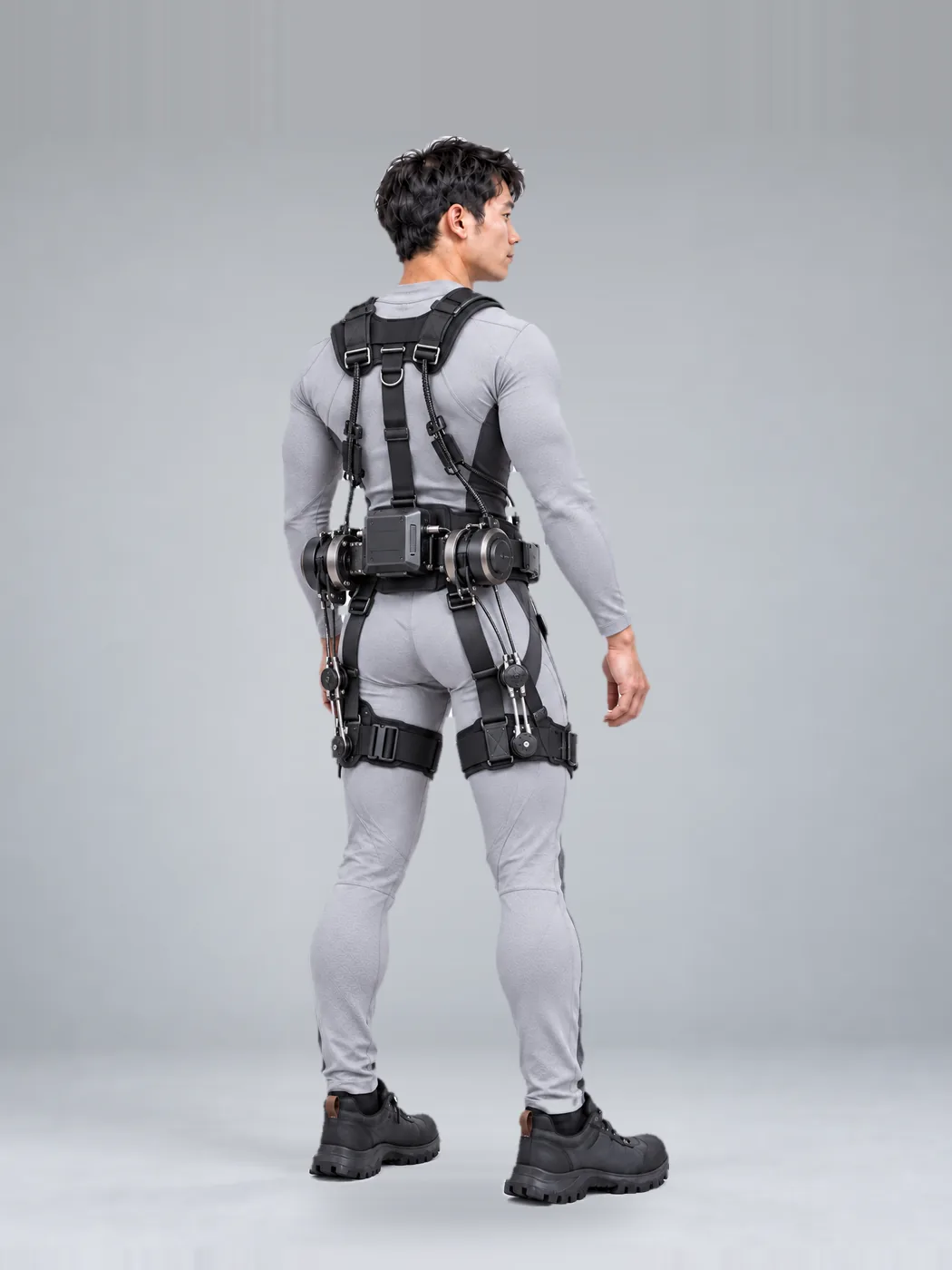 Concept image
2nd — Gear
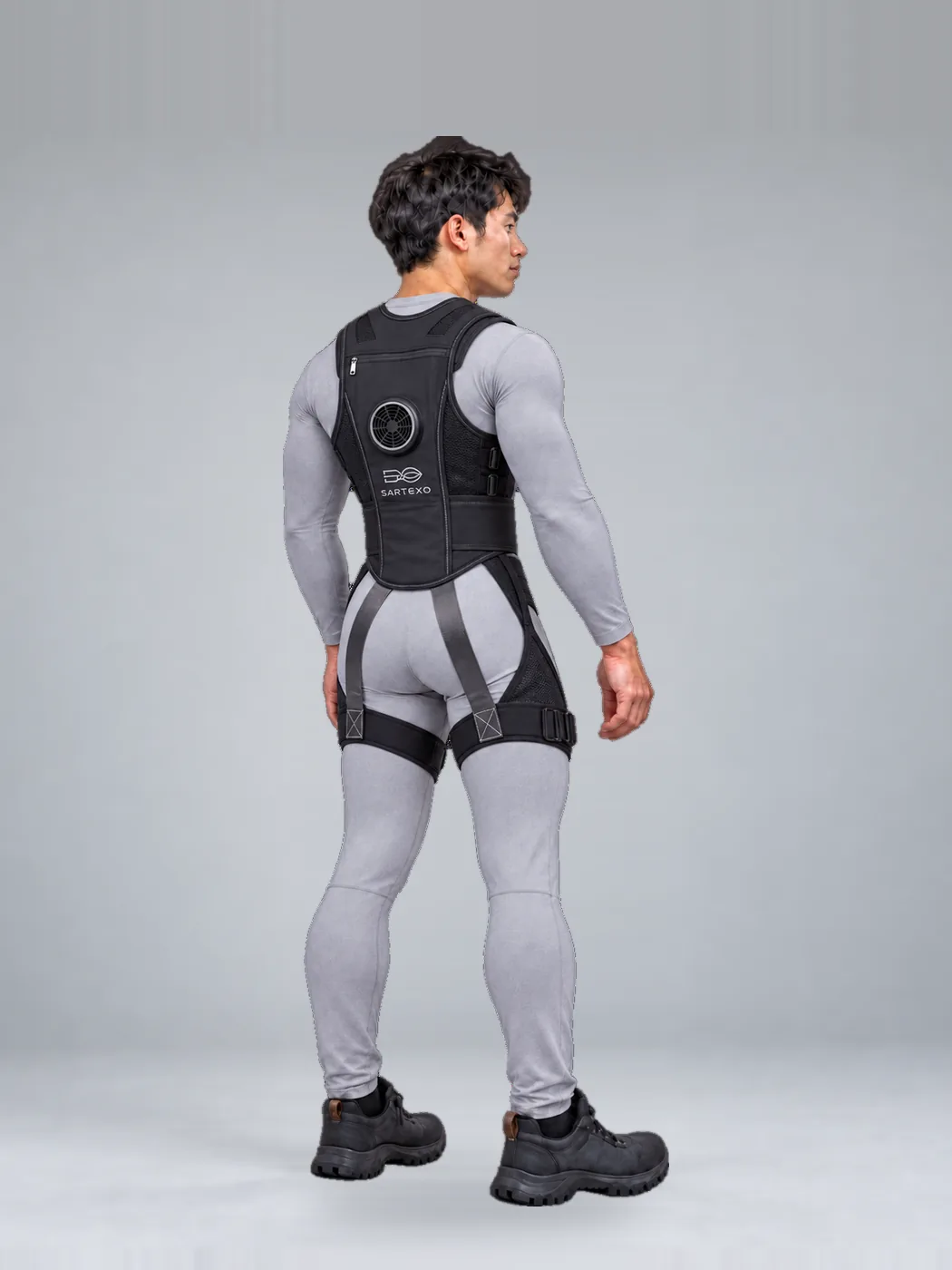 Concept image
3rd — Clothing
At a glance
Definition
A robot worn on the body to assist strength and movement
Three generations
Machine to gear to clothing — set by where the actuator sits
Where it is used
Industry, caregiving, rehabilitation, defense
How to choose
Task type, wear time, laundering, uniform integration
What a wearable robot is
A wearable robot is worn on the body to assist muscular effort or movement. Unlike an industrial robot that works in place of a person, its purpose is to add force in step with the wearer. That makes "does it get in the way of movement" a more important condition than "how much force can it produce".
The uses are broad: industrial sites where the same motion repeats, such as loading at distribution centers and overhead assembly on production lines; caregiving, where patients are lifted and repositioned; rehabilitation for people with reduced muscular strength; and defense work that handles heavy items while requiring mobility.
Academic literature often distinguishes an "exoskeleton" from an "exosuit", according to whether a rigid frame carries the load or the body itself becomes the load path.
How it works
Most active wearable robots have three parts. Sensors detect the wearer's movement or intent, a controller decides when and how much to assist, and an actuator produces the force. Passive designs have no sensors or controller; elastic elements return stored energy instead, which means no power is needed.
Of these, the actuator shapes the form factor most. Where the force-producing element sits determines the rest of the structure. If the actuator sits on a rigid frame, the frame has to exist; if it is a separate part resting on the body, straps are needed to hold it.
So the clearest way to read how wearable robots have changed is to ask where the actuator sits. The three stages below follow that question.
Where the actuator sits is what separates the generations.
First generation — machine
Concept imageEarly wearable robots built a skeleton from metal frames and hinges, with a motor and gearbox at each joint. The actuator sits on the frame, and the frame carries the weight and load down to the ground.
This structure delivers large forces reliably. In exchange, the wearer has to line their body up with the frame's joint positions, and the device brings its own weight and setup time. This approach is still used where large forces are required.
Put as an action, it is closer to "you fit your body to the machine frame".
Second generation — gear
Concept imageThe next step removed the frame and built the load path from textiles and straps. Because the body becomes the load path, total weight dropped sharply. Force comes from one of two sources: elastic elements such as springs or bands in passive designs, or a motor pulling a cable in active ones.
It became much lighter and freer to move in, but the actuator is still a separate part resting on the body. The pack holding the motor and battery, the straps that secure it, and the cable that transmits force all exist as gear distinct from clothing.
Put as an action: "you strap the gear tight to your body".
Third generation — clothing
Concept imageThe third step makes the actuator out of textile itself. With no separate motor or cable, the fabric contracts on its own to generate force. There is no frame to mount an actuator on, and no separate mechanism to transmit it.
Fabric Muscle, developed by SARTEXO, works this way. Shape memory alloy is processed into fine coil yarn and woven like cloth, so the whole fabric surface contracts when current flows. Because it is fabric, it can be cut and sewn along designed patterns — worn over workwear, or integrated into the workwear itself.
Put as an action: "you wear it". Not stepping into it, not strapping it on — wearing it is what separates this stage from the two before.
The fabric itself becomes the wearable robot's actuator.
Comparing the generations
| 1st — Machine | 2nd — Gear | 3rd — Clothing | |
|---|---|---|---|
| Structure | Rigid frame and hinges | Straps and cables | Garment structure |
| Actuation | Motors and gearboxes | Elastic, or motor and cable | The fabric contracts |
| Actuator location | On the frame | A separate part on the body | The fabric itself |
| Wearing action | You fit your body to the frame | You strap the gear on | You wear it |
| Load path | The frame | The body | The body |
Products differ within each generation. Only the general characteristics that follow from structure are listed.
Where it is used
In industry it is used for repetitive work that loads specific parts of the body — loading at distribution centers, overhead assembly on production lines, carrying materials on construction sites. The lower back and shoulders are the joints most often addressed.
In caregiving, lifting and repositioning patients repeats dozens of times a day, so demand for waist assistance is high. In rehabilitation, research continues on assisting the motions of raising an arm or walking for people whose strength has declined.
In defense, logistics and supply work requires handling heavy items while staying mobile, so light forms that do not restrict movement are under review.
How to choose
The type of work comes first. Whether the job involves bending and straightening the back, or holding the arms overhead for long periods, changes which joint needs support. Work that loads several areas may call for combining joint-specific products or considering an integrated suit.
Wear time matters just as much. If it has to stay on through a whole shift, weight and comfort outrank raw performance — however strong a device is, an uncomfortable one gets taken off.
Beyond that: whether the environment requires laundering, whether it must integrate with existing workwear or uniforms, and whether power is available. Passive designs need no power; active designs can control how much force and when.
Frequently asked questions
An exoskeleton is one kind of wearable robot — the kind where a rigid frame carries the load. Designs that transmit force through textiles and straps, or where the fabric itself is the actuator, are also wearable robots. Wearable robot is the broader category; exoskeleton is one form within it.
It varies widely by structure. Designs using metal frames and motors are relatively heavy; textile-based and clothing-type designs are far lighter. Weight also differs by assisted joint and configuration within the same approach, so check whether a figure includes the battery and controller before comparing.
It depends on the product. If the electronics and actuator can be detached, the garment portion can usually be laundered; otherwise spot cleaning may be the only option. For daily wear on site, confirm the cleaning method and interval before adoption.
That depends on the actuator. Motor-and-gearbox designs need the placement of those components worked into the design. A textile actuator can be cut and sewn along designed patterns, so it can be built into the workwear or uniform itself. Integration is generally a custom process that reviews the work motions and the uniform design together.
Learn more
Related reading

Fabric Muscle
What is Fabric Muscle?
A textile artificial muscle actuator woven from shape memory alloy coil yarn. It contracts on current alone, with no motor.
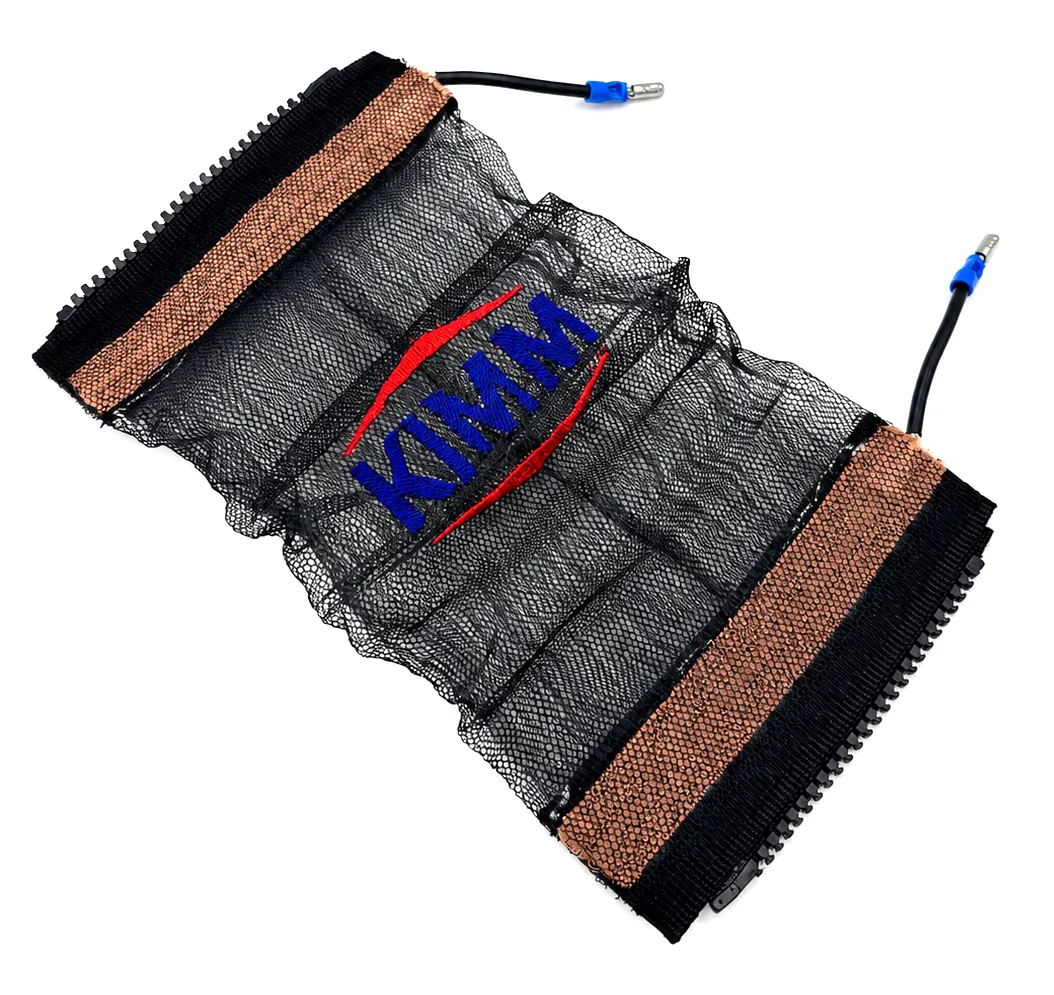
Shape memory alloy
How shape memory alloy artificial muscles work
Shape memory alloy returns to its original shape when heated. Coiling and weaving turn that into a surface-level artificial muscle.
Get Started
Ready to Work With Us?
Product adoption, pilot requests, technology partnership — start the conversation with SARTEXO.